
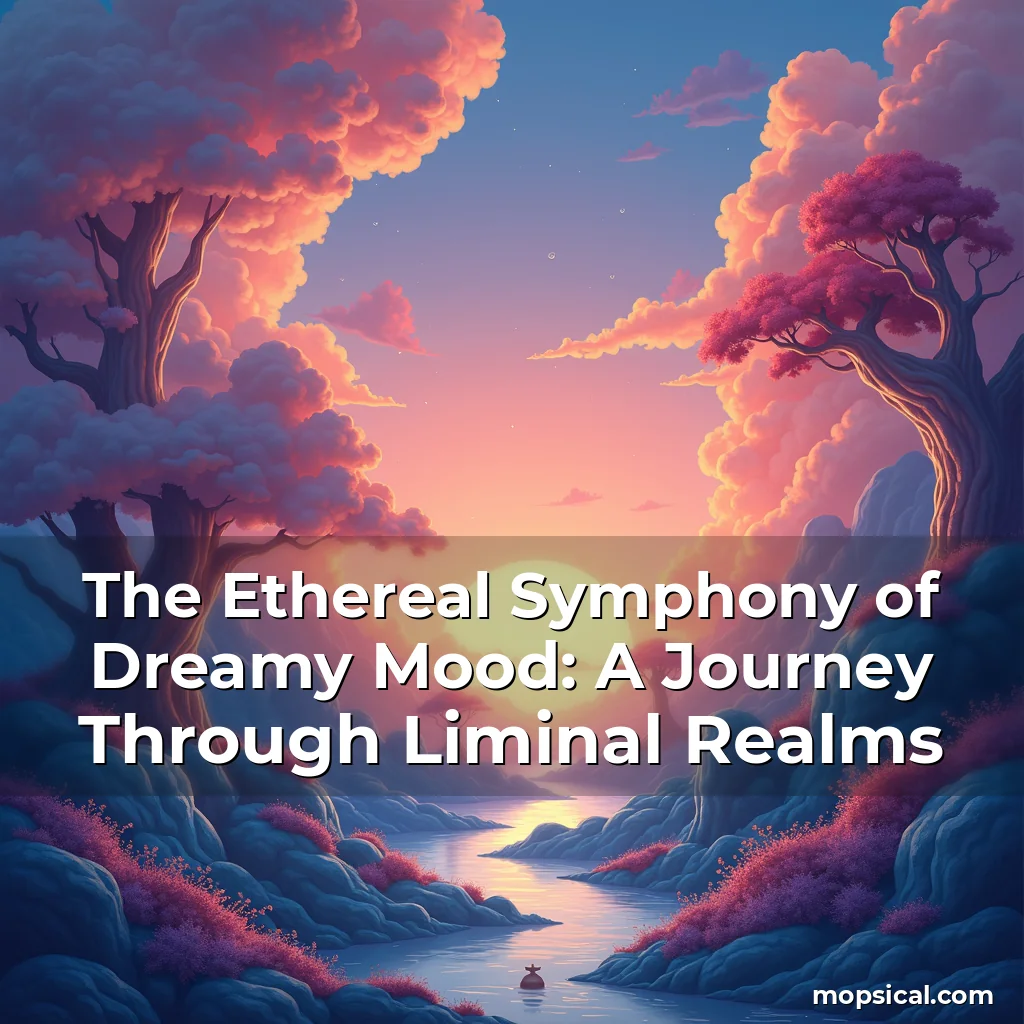
The Ethereal Symphony of Dreamy Mood: A Journey Through Liminal Realms
In an age where clarity is prized above all else, there exists a counter-movement toward embracing ambiguity—the dreamy mood. This state, characterized by its soft edges, surreal imagery, and emotional fluidity, invites us to wander through landscapes both internal and external without fixed destinations.
Rooted in art, music, literature, and even digital culture, the dreamy mood has become a powerful aesthetic force that transcends traditional boundaries between waking life and imagination. It thrives in the spaces between reality and reverie, offering solace and inspiration to those who seek connection beyond the tangible world.
The Alchemy of Ambiguity: Crafting the Dreamy Experience
Dreamy mood emerges from the alchemical fusion of sensory elements—light, sound, texture—that dissolve rigid structures and invite surrender to intuition. Unlike conventional aesthetics that emphasize precision, it flourishes in the interplay of shadows and illumination, creating a liminal space where meaning feels suspended yet deeply resonant.
This aesthetic finds particular resonance in visual arts, where artists employ techniques such as blurred lines, ethereal color palettes, and abstract forms to evoke a sense of floating within an amorphous realm. These choices do not aim to depict but rather to suggest—a gentle nudge toward introspection rather than interpretation.
- Fading Boundaries: The absence of clear outlines allows viewers to project their own narratives onto the artwork, making each encounter uniquely personal.
- Sensory Layering: Combining textures like velvet against glass creates tactile contrasts that mirror the duality inherent in dreams themselves—simultaneously comforting and disorienting.
Ethereal Soundscapes: Music’s Role in Cultivating Dreaminess
Musicians have long recognized the power of sound to transport listeners into altered states of consciousness. From Debussy’s impressionistic compositions to modern ambient genres, dreamy mood finds expression through musical elements that prioritize atmosphere over melody.
Instrumentation plays a crucial role here; instruments like harpsichords, glockenspiels, and synthesizers generate delicate tones that shimmer rather than assert dominance. These sounds weave together like threads in a tapestry, inviting the listener to lose themselves in sonic waves.
The Science Behind Serenity: Neurological Responses to Dreamy Sounds
Research indicates that exposure to dreamy soundscapes activates regions associated with memory retrieval and emotional processing. A study published in the *Journal of Cognitive Neuroscience* found participants exposed to ambient music showed increased activity in the hippocampus—an area critical for forming new memories—and reduced stress markers compared to control groups.
Moreover, these auditory experiences often induce theta brainwave patterns typically observed during light sleep stages, suggesting they may serve as cognitive bridges between wakefulness and dreaming. Such findings underscore how intentional design of sound environments can influence mental well-being profoundly.
Literary Dreams: Narrative Structures That Embrace the Unknowable
Writers harness language not merely to convey information but also to immerse readers in emotionally rich atmospheres. Stream-of-consciousness prose, poetic metaphors, and nonlinear storytelling are common tools employed when crafting texts infused with dream logic.
In novels like Vladimir Nabokov’s *Ada*, narrative timelines shift unpredictably much like thoughts drifting across consciousness. Readers navigate these shifting perspectives voluntarily, allowing themselves to get lost amidst layers of symbolism and metaphor while remaining engaged through lyrical beauty.
Digital Reveries: How Technology Shapes Contemporary Dreaminess
As technology advances, so too does our capacity to create immersive dream-like environments digitally. Virtual reality applications now simulate lucid dream scenarios complete with interactive elements designed specifically for therapeutic use or creative exploration purposes alike.
Mobile apps employing binaural beats manipulate frequencies to guide users into meditative trances akin to REM sleep cycles. Similarly, AI-generated visuals produce ever-changing fractals that respond dynamically based upon user input—a perfect embodiment of perpetual motion within stillness.
Cultural Resonance Across Time & Place: Global Perspectives On Dreaminess
Dreams have always held cultural significance across civilizations—from ancient Egyptian beliefs regarding divine messages received during slumber to Japanese Noh theatre which relies heavily upon symbolic representations meant to provoke subconscious associations.
In contemporary contexts, fashion houses incorporate dream motifs prominently through collections featuring flowing fabrics reminiscent of mist or clouds. Fashion becomes wearable poetry expressing innermost desires through fabric choices alone without needing explicit statements made aloud.
Practical Applications Of Dreamy Mood In Everyday Life
Integrating aspects of dreamy mood into daily routines offers numerous benefits ranging from enhanced creativity levels among professionals working remotely to improved focus capabilities among students preparing exams under high-pressure conditions.
Simple practices include setting aside time each morning before sunrise for journaling exercises focusing solely on impressions rather than concrete events experienced overnight. Such rituals help cultivate mindfulness skills essential for maintaining balance amid fast-paced lifestyles prevalent today globally.
Conclusion
The dreamy mood remains a testament to humanity’s enduring fascination with mystery and wonder. As we continue navigating complexities surrounding identity formation within increasingly digitized societies, revisiting this timeless aesthetic provides invaluable insight into what makes us truly human.
To fully embrace the dreamy mood is ultimately about learning how best to hold contradictions comfortably—allowing ourselves moments of uncertainty alongside periods requiring absolute clarity without feeling compelled choose exclusively one path forward permanently.