
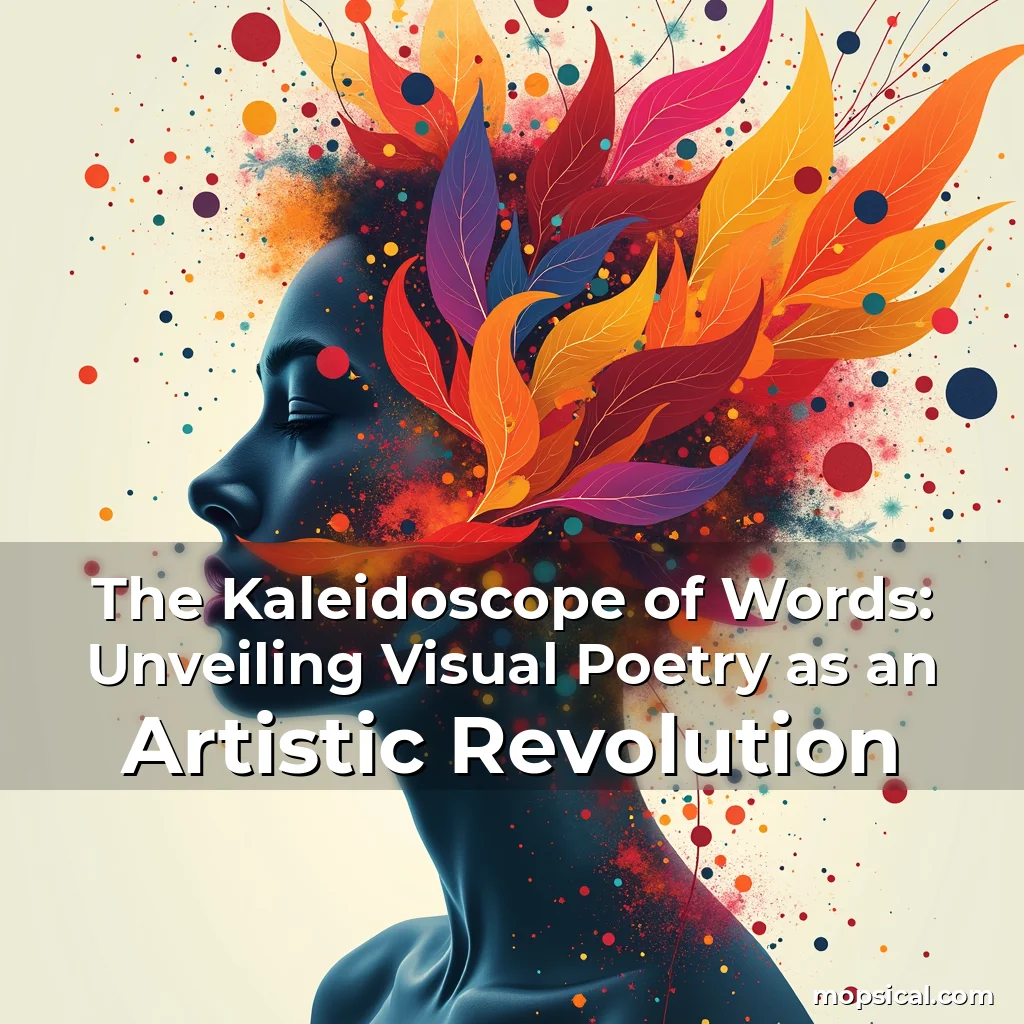
The Kaleidoscope of Words: Unveiling Visual Poetry as an Artistic Revolution
In an era where digital media reigns supreme and traditional art forms are constantly evolving, visual poetry has emerged as a groundbreaking medium that marries language with imagery. This fusion not only challenges conventional notions of literature but also redefines how we perceive artistic expression.
At its core, visual poetry is a dynamic interplay between text and image, creating a multisensory experience that transcends mere reading. It invites viewers to engage with words in new dimensions, transforming static letters into vibrant canvases of thought and emotion.
Redefining Literary Boundaries Through Visual Innovation
Visual poetry disrupts the linear narrative structure typical of written texts by incorporating spatial arrangements, typography, and graphic elements. This approach allows poets to craft compositions that resonate visually while conveying profound messages through carefully chosen visuals.
By utilizing techniques such as calligraphy, collage, and abstract shapes, artists can create pieces that evoke emotions beyond what standard prose could achieve. These methods enable a deeper connection between the reader/viewer and the intended meaning behind each creation.
- Calligraphic Flourishes: Artists use intricate handwriting styles to add depth and texture to their work, making each letter feel alive within the composition.
- Collage Techniques: Merging different materials or images helps construct layered narratives that reflect complex themes without relying solely on textual descriptions.
Historical Roots and Evolution of Visual Poetry
The origins of visual poetry trace back centuries ago when ancient civilizations used symbols alongside text to enhance storytelling traditions. From Egyptian hieroglyphics to Chinese ideograms, these early forms laid foundational principles still relevant today.
As time progressed, movements like Dadaism embraced experimental approaches during World War I, pushing boundaries further by integrating randomness and absurdity into poetic structures. Figures such as Marcel Duchamp contributed significantly through his readymade objects infused with linguistic playfulness.
Milestones in the Development of Visual Poetry
During the mid-20th century, concrete poetry gained prominence across Europe, emphasizing form over function. Poets experimented with arranging words on pages according to phonetic patterns or semantic associations rather than grammatical rules.
This period saw notable figures emerge who championed visual experimentation—like Brazilian poet Haroldo de Campos whose works combined typographic innovation with political commentary effectively capturing societal issues through striking visual metaphors.
Modern Interpretations and Digital Influence
With advancements in technology, contemporary visual poets now harness tools ranging from digital design software to interactive web platforms. These innovations allow creators greater flexibility in experimenting with color gradients, animations, and multimedia integrations.
Instagram and other social media outlets have become fertile ground for sharing visual poems quickly reaching global audiences. Hashtags serve both aesthetic purposes and functional roles helping categorize diverse expressions under unified themes or movements.
Techniques and Tools Used in Crafting Visual Poetry
Crafting compelling visual poems involves mastering various artistic disciplines including illustration skills, knowledge of layout design, understanding color theory fundamentals, etc. Each element contributes uniquely towards achieving desired emotional impact upon observers.
To begin exploring this field creatively, aspiring artists might start by selecting a powerful phrase or concept they wish to convey visually. Then consider which visual motifs best represent those ideas—whether geometric patterns symbolizing orderliness or chaotic scribbles reflecting inner turmoil.
- Typography Selection: Choosing appropriate fonts enhances message delivery; serif typefaces often exude tradition whereas sans-serif ones suggest modernity.
- Color Psychology: Understanding how colors influence perception enables better communication strategies—warm hues inspire energy while cool tones promote calmness.
Exploring Themes Commonly Addressed in Visual Poetry
Themes explored range widely—from existential inquiries regarding human existence to socio-political critiques addressing current events globally. Nature-inspired subjects frequently appear too, using organic shapes mimicking leaf veins or water ripples subtly guiding attention toward ecological concerns.
Sometimes personal experiences shape thematic choices entirely; intimate reflections on love lost might manifest physically via torn paper fragments scattered asymmetrically around central focal points representing broken relationships metaphorically.
Notable Practitioners Shaping Today’s Landscape
Around the world numerous influential names stand out contributing significantly towards shaping present-day practices related to visual poetics. Their distinctive styles offer rich sources for inspiration among newcomers eager to explore similar creative avenues themselves.
Among them, Claudia Rankine’s “Citizen” exemplifies hybridized formats blending photography with lyrical passages discussing race relations powerfully illustrating intersectionality aspects inherent within marginalized communities’ lived realities.
Fostering Community Engagement Through Collaborative Projects
Collaboration plays pivotal role enhancing accessibility levels especially since it encourages participation regardless prior skill sets possessed individuals may hold initially. Group activities centered around collective creation foster shared ownership promoting inclusivity vital within any thriving arts ecosystem.
Workshops organized regularly provide structured environments enabling learners gain hands-on experience applying theoretical concepts practically thereby bridging gaps existing sometimes between academic teachings versus real-world implementations successfully.
Challenges Faced By Contemporary Practitioners
Despite growing appreciation surrounding this niche area, practitioners encounter obstacles hindering widespread adoption particularly concerning institutional recognition challenges faced due lack formal categories designated specifically for visual literary works within academia settings predominantly focused upon traditional textual analyses.
Economic viability remains another hurdle requiring innovative solutions; unlike established mediums offering tangible products easily monetizable online presence alone proves insufficient unless paired strategically with alternative revenue streams generated perhaps through commissioned projects involving branding campaigns leveraging brand identity aligned closely with thematic messaging conveyed authentically through visual poetic expressions.
Future Prospects And Technological Integration Opportunities
Looking ahead there exists immense potential leveraging emerging technologies capable transforming passive viewing experiences actively immersive journeys allowing users interact dynamically altering displayed content based upon user inputs generating personalized interpretations reflective unique perspectives held viewers individually.
Augmented reality applications could revolutionize presentation modes letting audiences navigate three-dimensional spaces containing embedded poetic verses activated contextually dependent location data thus redefining physical interaction possibilities previously unimaginable confined strictly two-dimensional surfaces traditionally associated with print-based outputs.
Conclusion
Visual poetry stands at fascinating crossroads where linguistics meets aesthetics offering unprecedented opportunities reshaping future trajectories both personally fulfilling professionally rewarding paths simultaneously accessible wide variety people irrespective backgrounds seeking meaningful ways express themselves creatively.
Embracing this multidisciplinary discipline means embracing freedom unbounded creativity empowering everyone participate shaping ever-evolving landscape continually expanding horizons defining what constitutes true artistic achievement continuously challenging expectations perpetually reinventing itself anew every moment.