
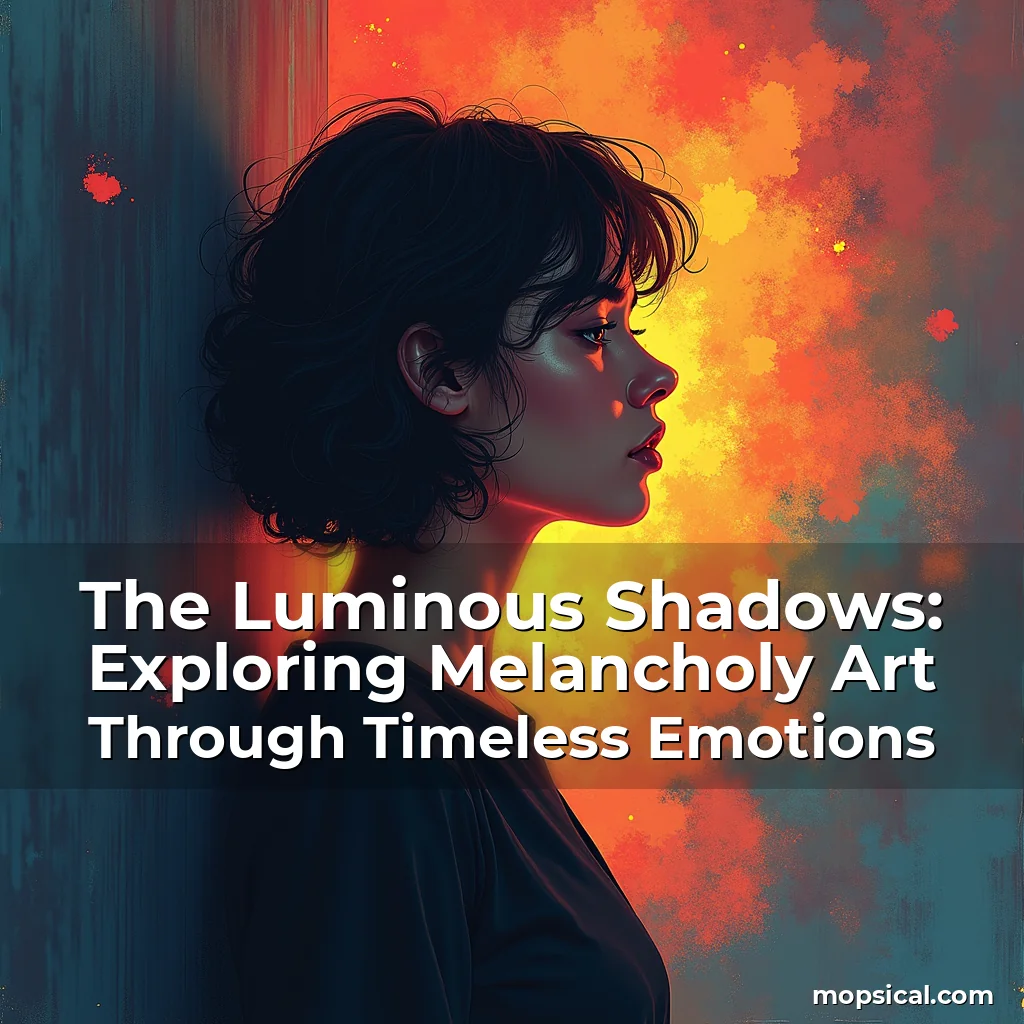
The Luminous Shadows: Exploring Melancholy Art Through Timeless Emotions
Melancholy art is an evocative genre that captures the essence of sorrow, introspection, and emotional depth within visual expression. It transcends mere aesthetics by inviting viewers into a shared experience of profound feelings, often resonating deeply with those who seek solace in its somber beauty.
This exploration delves into the historical roots, contemporary interpretations, and the psychological underpinnings of melancholic artistic expressions across various mediums—from painting to music and literature. Understanding these elements provides insight into how artists convey complex emotions through their work, offering both catharsis and connection.
The Origins of Melancholy in Artistic Expression
The concept of melancholy has been woven into human history as long as there have been artists expressing emotion through creative works. Ancient civilizations recognized it not merely as sadness but as a state rich with philosophical significance.
In classical Greece, the four humors theory categorized melancholy among other bodily fluids associated with temperament. This belief influenced early artistic depictions where figures embodying melancholy were portrayed with contemplative gazes and subdued colors, reflecting inner turmoil rather than outright despair.
During the Renaissance period, artists began exploring themes of melancholy more explicitly. Works such as Dürer’s *Melencolia I* exemplified this shift towards using symbolic imagery to represent intellectual and emotional states without direct narrative exposition.
- Symbols of Sorrow: Artists used objects like wilted flowers or empty chairs to signify loss and absence indirectly.
- Color Palette Shifts: The transition from vibrant hues to muted tones marked a deliberate choice to evoke deeper emotional resonance.
Melancholy in Painting: From Caravaggio to Contemporary Masters
Painting remains one of the most potent forms of conveying melancholic emotion due to its ability to manipulate light, shadow, and color effectively. Throughout centuries, painters have harnessed these tools to create atmospheres steeped in quiet reflection.
Caravaggio’s use of chiaroscuro—dramatic contrasts between light and dark—became synonymous with capturing raw human emotion. His depiction of saints and biblical scenes often infused them with a sense of vulnerability and introspection typical of melancholic themes.
Modern masters continue this tradition while infusing new perspectives shaped by current social contexts. For instance, Edward Hopper’s lonely diners and empty streets reflect modern isolation and existential angst subtly embedded within everyday settings.
Hopper’s paintings resonate because they mirror personal experiences of solitude amidst urban life. Viewers find themselves reflected in his solitary figures, creating an empathetic bridge between artist and observer.
Contemporary artists also explore melancholy through abstract means, focusing less on literal representation and more on emotional abstraction. These pieces challenge traditional notions of what constitutes “sad” artwork by emphasizing mood over form.
Artists like Anselm Kiefer incorporate materials such as straw and ash to symbolize decay and memory. His textured surfaces invite tactile engagement alongside visual interpretation, deepening the viewer’s emotional response.
Kiefer’s work does not aim solely at eliciting pity; instead, it encourages contemplation on transience, mortality, and humanity’s relationship with nature—all central aspects of melancholic thought.
The Role of Music in Conveying Melancholy
Musical compositions offer another powerful medium for articulating melancholic sentiments. Unlike static images, music unfolds dynamically, allowing listeners to traverse emotional landscapes over time.
Composers throughout history have utilized dissonance, minor keys, and slow tempos to evoke feelings of longing and nostalgia. Bach’s Passions, for example, employ intricate counterpoint techniques to express spiritual anguish and redemption intertwined with melancholic undertones.
Classical composers such as Chopin mastered the art of weaving melancholy into piano nocturnes and preludes. His works are celebrated for their lyrical quality combined with underlying sorrow—a hallmark feature distinguishing his style from contemporaries.
Rock musicians too engage with melancholy differently yet similarly impactful ways. Bands like Radiohead utilize layered soundscapes and ethereal vocals to construct sonic environments charged with uncertainty and existential dread.
In electronic music genres, producers craft ambient tracks designed specifically for immersive listening sessions aimed at inducing reflective states akin to meditation or introspective journaling exercises.
These diverse approaches show that regardless of era or instrumentation, musicians consistently return to melancholic motifs when seeking authenticity in their compositions.
Literature as a Canvas for Melancholic Narratives
Literary works provide extensive platforms for delving into melancholy narratives through character development, plot structure, and thematic exploration. Writers weave tales filled with poignant moments that linger in reader consciousness well after finishing pages turned.
Dostoevsky’s novels frequently grapple with existential questions posed against backdrops rife with suffering and moral ambiguity. Characters wrestle internally with guilt, hopelessness, and searching meaning amid chaos—an embodiment of literary melancholy.
Emily Brontë’s *Wuthering Heights* encapsulates Gothic melancholy through intense relationships fraught with passion and destruction. The moorlands serve as both setting and metaphor for unrelenting emotional turbulence experienced by protagonists.
Contemporary authors continue pushing boundaries regarding how melancholy can be represented textually. Authors such as Haruki Murakami blend surrealism with realism to depict characters navigating worlds where melancholy coexists naturally alongside mundane occurrences.
Murakami’s stories often contain elements of loneliness and alienation rendered poetically rather than overtly tragic. This nuanced portrayal allows readers space to project their own experiences onto textual fabric provided by writer.
Thus, whether through classic prose or modern storytelling techniques, literature maintains strong ties to investigating melancholy as fundamental aspect of human condition worth examining closely.
Melancholy Art in Modern Media and Digital Spaces
The digital age presents unprecedented opportunities for disseminating and experiencing melancholic art beyond physical galleries or concert halls. Social media platforms enable instant access to global artistic communities united around common interests including somber aesthetics.
Instagram influencers curate feeds dedicated entirely to melancholic visuals—black-and-white photographs, desaturated videos, poetic captions—that collectively foster online spaces encouraging mindful appreciation of sad beauty.
Videos created especially for YouTube channels focus heavily on atmospheric soundtracks paired with visually arresting footage meant primarily for relaxation purposes during stressful times. These clips draw upon principles established earlier by film directors known for crafting emotionally dense scenes.
Film director Andrei Tarkovsky famously emphasized atmosphere over action in cinematic storytelling. His films’ prolonged shots of natural landscapes or interior domesticity underscored themes related to memory, loss, and impermanence inherent within melancholic worldview.
Similarly, video game developers increasingly integrate melancholic storylines into interactive narratives. Games featuring characters dealing with grief or identity crises allow players immersion into emotional journeys previously confined mainly to books or movies.
Such integration signifies broader cultural acceptance toward acknowledging value present within melancholic expressions across different formats accessible now via technology-driven mediums.
Cultural Perceptions of Melancholy Across Societies
Cultures worldwide interpret melancholy uniquely based on historical context, religious beliefs, and societal norms governing acceptable displays of emotion publicly versus privately.
In Japan, the concept of *mono no aware* embodies sensitivity toward ephemeral things, cultivating awareness about transient nature of life itself which aligns closely with Western understandings of melancholy though expressed differently culturally.
Contrastingly, some Latin American cultures may view excessive mourning negatively unless tied directly to familial obligations such as honoring deceased relatives through elaborate rituals celebrating memories rather than wallowing helplessly in sorrow.
Religious traditions influence perceptions significantly too—Christianity associates depression with sinfulness requiring repentance whereas Buddhism sees suffering as inevitable part leading ultimately toward enlightenment thus reframing melancholy positively albeit still acknowledged seriously.
These varying attitudes affect how individuals interact with melancholic artworks globally; what might seem profoundly moving in one region could appear overly dramatic elsewhere depending largely upon prevailing values shaping aesthetic preferences locally.
Understanding these differences enriches cross-cultural dialogues surrounding melancholic creations enabling greater empathy among audiences encountering unfamiliar representations rooted firmly within distinct heritage backgrounds.
The Psychological Benefits of Engaging With Melancholy Art
Engagement with melancholic artistic forms offers numerous psychological benefits including enhanced self-awareness, emotional regulation skills, and therapeutic potential applicable even clinically.
Studies indicate exposure regularly to melancholic stimuli helps individuals process difficult emotions safely without confronting actual trauma sources head-on thereby functioning somewhat similar role played by fiction in general except focused specifically here on sadness-related topics.
Art therapy programs increasingly incorporate melancholic themes because clients report feeling understood better able articulate personal struggles once connected cognitively/visually/emotionally with relevant material presented therapeutically controlled environment.
Moreover, viewing melancholic art activates neural pathways associated with empathy enhancing capacity for understanding others’ experiences particularly beneficial within group settings aiming promote solidarity amongst participants sharing similar concerns issues facing them personally socially.
Regular interaction facilitates gradual normalization accepting certain levels discomfort necessary growth maintaining balance health mentally physically overall wellbeing holistically approached comprehensively considering multiple facets influencing individual lives daily.
Therefore incorporating melancholy art consciously into lifestyle routines contributes positively toward building resilient mental frameworks capable handling adversities encountered inevitably throughout existence.
Conclusion
Melancholy art serves as vital conduit connecting human beings universally irrespective geographical locations chronological epochs through shared emotional vocabulary encoded visually sonically literarily etcetera.
By embracing melancholic expressions found everywhere—from ancient murals depicting mythological tragedies up until latest experimental installations questioning very nature reality itself—we acknowledge importance residing within our collective capacity endure face hardships gracefully finding meaning beauty amidst shadows cast upon us constantly.